14 Chinatown Complex Food Centre Best Stalls & What to Eat
Imagine stepping into a towering four-floor temple of food, where the air itself seems to shimmer with possibility. Chinatown Complex Food Centre is <a href="/destinations/singapore" class="internal-l
Imagine stepping into a towering four-floor temple of food, where the air itself seems to shimmer with possibility. Chinatown Complex Food Centre is Singapore's culinary heartbeat—a sprawling, chaotic, utterly mesmerizing hawker center that draws 15,000 visitors daily. With over 260 vendor stalls crammed across its floors, each one is a chapter in Singapore's multicultural food story. From no-frills chicken rice vendors who've been slinging plates for decades to trendy new fusion stalls, this is where locals queue for 45 minutes without complaint and where the true soul of Singapore's food culture thrives. Whether you're a first-time visitor or a devoted regular, Chinatown Complex offers an authentic slice of hawker life that cannot be replicated—raw, real, and absolutely delicious.

What to Expect
Prepare yourself for sensory overload in the best possible way. The moment you enter Chinatown Complex, your ears are greeted with the constant percussion of metal spatulas scraping woks, the rapid-fire Hokkien of vendors calling orders, and the ambient buzz of thousands of conversations layered into a comfortable din. Your nose experiences a symphony of aromas: the deep, savory umami of chicken stock simmering for hours, the pungent fermented smell of preserved vegetables, the sweet-spicy whiff of chili paste, and the unmistakable charred smokiness of wok cooking. Visually, you'll encounter organized chaos—stalls are tightly packed, color-coordinated by floor and cuisine type, with overhead menus scrawled in markers and laminated price lists. The humidity hovers around 85 percent, so expect sweat and the occasional drip from overhead condensation (bring tissues). You'll notice the crowd dynamics: elderly vendors moving with practiced precision, young families navigating with strollers, office workers in business casual rushing through lunch, and tourists weaving between tables. The food itself is the real visual star—steaming bowls of laksa crowned with prawns, glistening plates of char kway teow, golden chicken resting on fragrant rice. Expect to smell food before you see it, to hear your stomach rumbling before you've even ordered, and to leave with sauce splattered on your shirt (a badge of honor). Most importantly, expect the food to taste infinitely better than you imagined—simple, bold, unapologetically authentic.
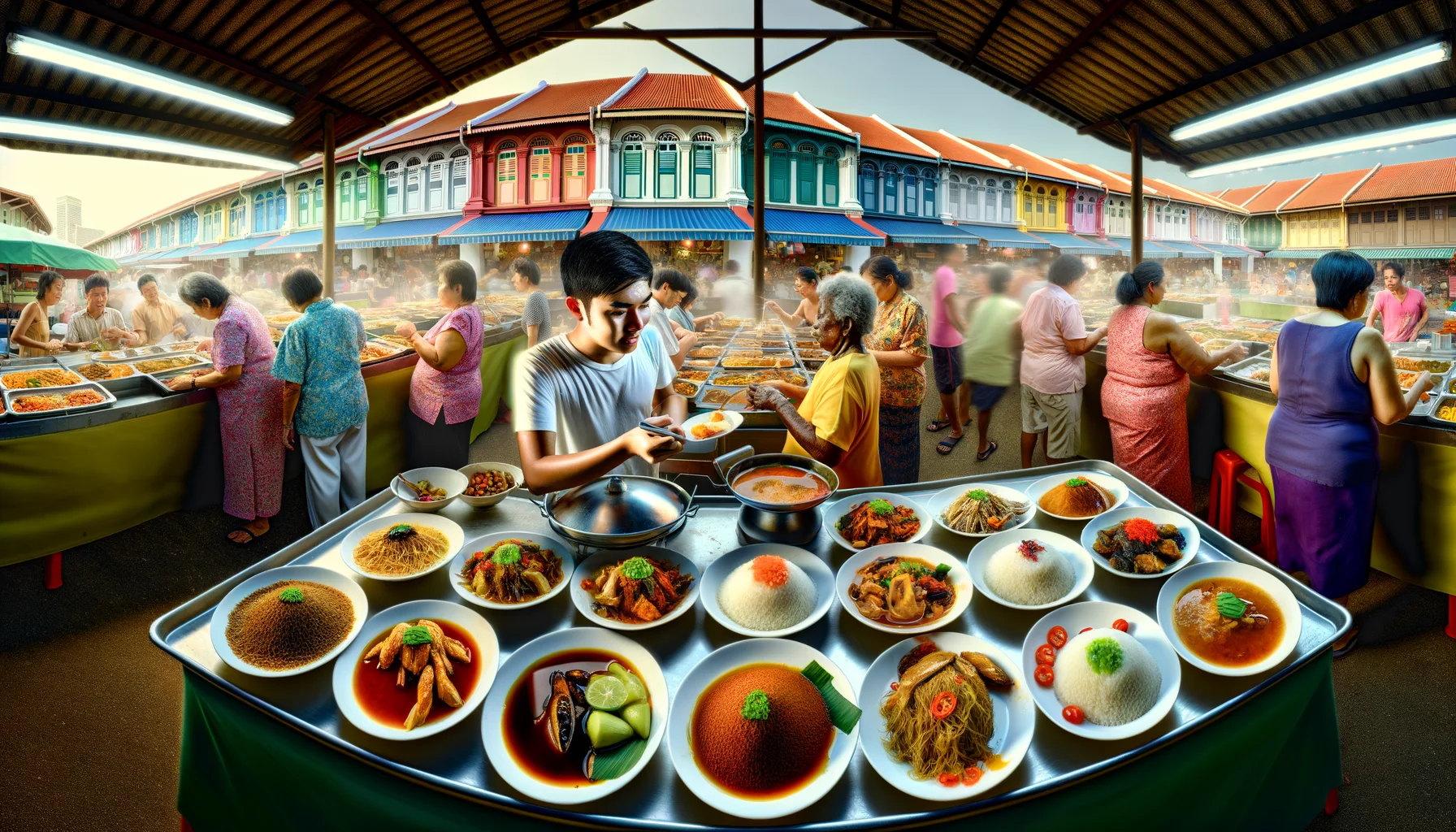
Welcome to Chinatown Complex Food Centre, where the sizzle of woks, the aroma of simmering broths, and the chatter of thousands of hungry diners create an intoxicating sensory experience. This isn't just Singapore's largest hawker center by stall count—it's a living, breathing testament to the city's multicultural food heritage, where over 15,000 visitors descend daily across four floors seeking authentic flavors passed down through generations. The moment you step inside, you're enveloped by layers of scent: the pungent char of wok-fried chicken rice competing with the delicate anise notes of bubbling laksa broths. Vendors shout orders in Hokkien, Cantonese, and Tamil as steam rises from countless stalls, creating an almost choreographed chaos that first-time visitors find both overwhelming and utterly captivating. Yet beneath this vibrant surface lies a complex story. With 260+ vendor stalls generating approximately SGD 120 million in annual food sales (2024), Chinatown Complex represents both the resilience and fragility of Southeast Asian food retail. Rising rents—up 25 percent since 2020—combined with labor shortages and the rise of delivery apps have created mounting pressure on traditional vendors. While premium fusion stalls and specialty offerings (durian, vegetarian dishes) attract younger diners willing to pay higher prices, the mid-range operators who built this institution face an uncertain future. This is hawker culture at a crossroads: a place where timeless recipes meet modern commerce, and where every bowl of noodles tells a story of adaptation, tradition, and survival.
Visitor Tips
Best Time to Visit: Arrive between 10:30–11:00 AM before the lunch rush explodes, or after 2:30 PM when queues subside. Weekday mornings offer the most relaxed experience, while weekends attract heavier tourist traffic and longer waits. Avoid 12:00–1:30 PM peak lunch hours unless you enjoy standing with your tray for 20+ minutes. Pro Tips: Bring cash (many traditional stalls don't accept cards), wear comfortable shoes (you'll be standing), and don't overthink your order—locals navigate by stall number, not name. Try the chicken rice at stalls with the longest queues (this isn't tourist advice; it's the Singaporean way). Start at the top floors and work your way down to avoid walking upstairs when your stomach is full. Most stalls operate 10 AM–9 PM, but some close by 7 PM, so don't arrive too late. Tables fill quickly during peak hours; eat as you go rather than securing a table first. Save Money: Skip the premium durian stalls and specialty fusion offerings on your first visit—they're overpriced for tourists. Chicken rice costs SGD 3–5, laksa runs SGD 4–6, and char kway teow averages SGD 5–7. Budget SGD 15–20 per person for a satisfying meal with drink and dessert. Avoid drinks sold by stall vendors; instead, grab fresh sugarcane juice from the juice vendors for SGD 2.50–3. Don't order from stalls targeting tourists near the main entrance—the best food is hidden deeper inside.
How to Get There
By Metro (MRT): The most convenient option. Take the MRT to Chinatown Station (NE8 line). Exit via Exit A, and Chinatown Complex is a 2-minute walk away at 335 Smith Street. The journey from Orchard takes approximately 15 minutes (SGD 1.35–1.80 depending on peak/off-peak). From the airport, take the East-West Line to Tanjong Pagar Station, then transfer to the North-East Line toward Chinatown (total time: 45–55 minutes, cost: SGD 2.20). By Taxi: Grab a taxi (via the Grab app) or flag one down. Fares vary by location: from Marina Bay: SGD 8–12 (8 minutes), from Orchard: SGD 12–16 (12 minutes), from the airport: SGD 25–35 (40 minutes). Taxis can drop you directly at the main entrance on Smith Street, making this ideal if you're carrying luggage or traveling in a group. By Car: If you're driving, use the multi-level car park directly beneath Chinatown Complex (entrance on Pagoda Street). Parking costs SGD 1.20–2.50 per 30 minutes, with a maximum of SGD 5 after 8 hours. Note: street parking around the area is limited and metered (SGD 1.20–2.00 per hour, Monday–Sunday, 8 AM–10:30 PM). Driving is least recommended due to tight streets and limited parking availability during peak hours.
Frequently Asked Questions
Frequently Asked Questions
- Which stalls at Chinatown Complex generate the highest customer volume?
- Chicken rice vendors consistently rank highest in foot traffic. These beloved stalls serve 200–300 customers daily during lunch hours, with queues extending 40–60 minutes at peak times. Noodle stalls offering laksa, wonton, and char kway teow occupy the second tier with 150–200 daily customers each. Interestingly, newer fusion offerings and premium specialty stalls featuring durian and vegetarian options have gained momentum in recent years, attracting smaller but more dedicated customer bases willing to pay premium prices.
- Why are traditional hawker stalls closing at Chinatown Complex?
- The economics have become increasingly challenging for legacy vendors. Rental costs have surged 25 percent since 2020, with the Housing and Development Board implementing annual increases of 8–12 percent. Labor expenses now exceed SGD 4,400 monthly for a two-person stall, while traditional food margins range only SGD 3,000–6,000 monthly. Additionally, competition from delivery platforms (Grab, Foodpanda) and modern cloud kitchens has redirected younger customers away from physical locations, further pressuring already-thin profit margins.
- How much do rental stalls cost at Chinatown Complex?
- The Housing and Development Board doesn't publicly disclose exact figures, but industry sources indicate monthly rents range from SGD 1,800–3,200 depending on floor location and stall size. Prime locations command higher premiums, while basement wet market stalls cost less. With annual increases of 8–12 percent factored in, operators face significant cost pressure relative to their monthly income potential.
- Are younger Singaporeans still visiting Chinatown Complex?
- Visitation patterns have shifted noticeably. Young adults aged 18–35 increasingly purchase hawker food through delivery apps rather than dining in person—34 percent now order via Grab and Foodpanda, compared to just 12 percent in 2019. However, those who do visit tend to favor fusion offerings and premium specialty stalls over traditional chicken rice and noodle vendors, indicating a generational shift in food preferences and dining behaviors.
- What role does the wet market play in Chinatown Complex's business model?
- The basement wet market, historically a major draw for both consumers and food vendors sourcing ingredients, now faces significant headwinds. Direct competition from supermarket chains offering convenience and fixed pricing has eroded its strategic importance. While the wet market remains operational, foot traffic has declined substantially as modern retail alternatives provide broader selection and easier parking, reducing its contribution to the complex's overall revenue and visitor appeal.