34 interesting UAE milestones that will blow your mind
The United Arab Emirates has accomplished more in five decades than most nations manage in two centuries. From a federation of seven emirates wi
The United Arab Emirates has accomplished more in five decades than most nations manage in two centuries. From a federation of seven emirates with a combined GDP of roughly $5 billion in 1971, the UAE has grown into a $500+ billion economy that rivals several G20 nations in per-capita income. The World Bank reports that the UAE ranks among the top 20 most competitive economies globally, while the International Monetary Fund projects continued growth through 2026 despite regional volatility. This transformation—from pearl diving and desert settlement to aerospace manufacturing, renewable energy deployment, and autonomous vehicle testing—represents one of the most accelerated modernization trajectories in contemporary economic history. Understanding the specific milestones that enabled this shift offers insight into how strategic infrastructure investment, diversification policy, and regulatory innovation can reshape a nation's trajectory within a generation. This remarkable journey is not just about numbers; it's a story of visionary leadership, bold decisions, and relentless pursuit of excellence that has positioned the UAE as a global model for rapid development. Visitors to the UAE today can witness firsthand the tangible results of these policies in the stunning skylines, world-class infrastructure, and vibrant multicultural society that define this dynamic nation.

What to Expect
When exploring the UAE's economic transformation, you'll encounter a fascinating blend of historical context and cutting-edge innovation. You'll see the gleaming glass towers of Dubai's financial district juxtaposed against traditional souks, hear the hum of autonomous vehicles testing alongside the call to prayer, smell the aromatic spices in old markets contrasting with the clean scent of modern air-conditioned malls, feel the intense desert heat outside while experiencing climate-controlled indoor ski slopes, and taste the diverse culinary offerings from around the world. The sensory experience is overwhelming—from the visual spectacle of the Burj Khalifa's light shows to the tactile luxury of five-star hotels. You'll witness how traditional dhow boats still ply the waterways while massive container ships dock at automated ports, creating a unique blend of heritage and futurism that defines the UAE's economic story.
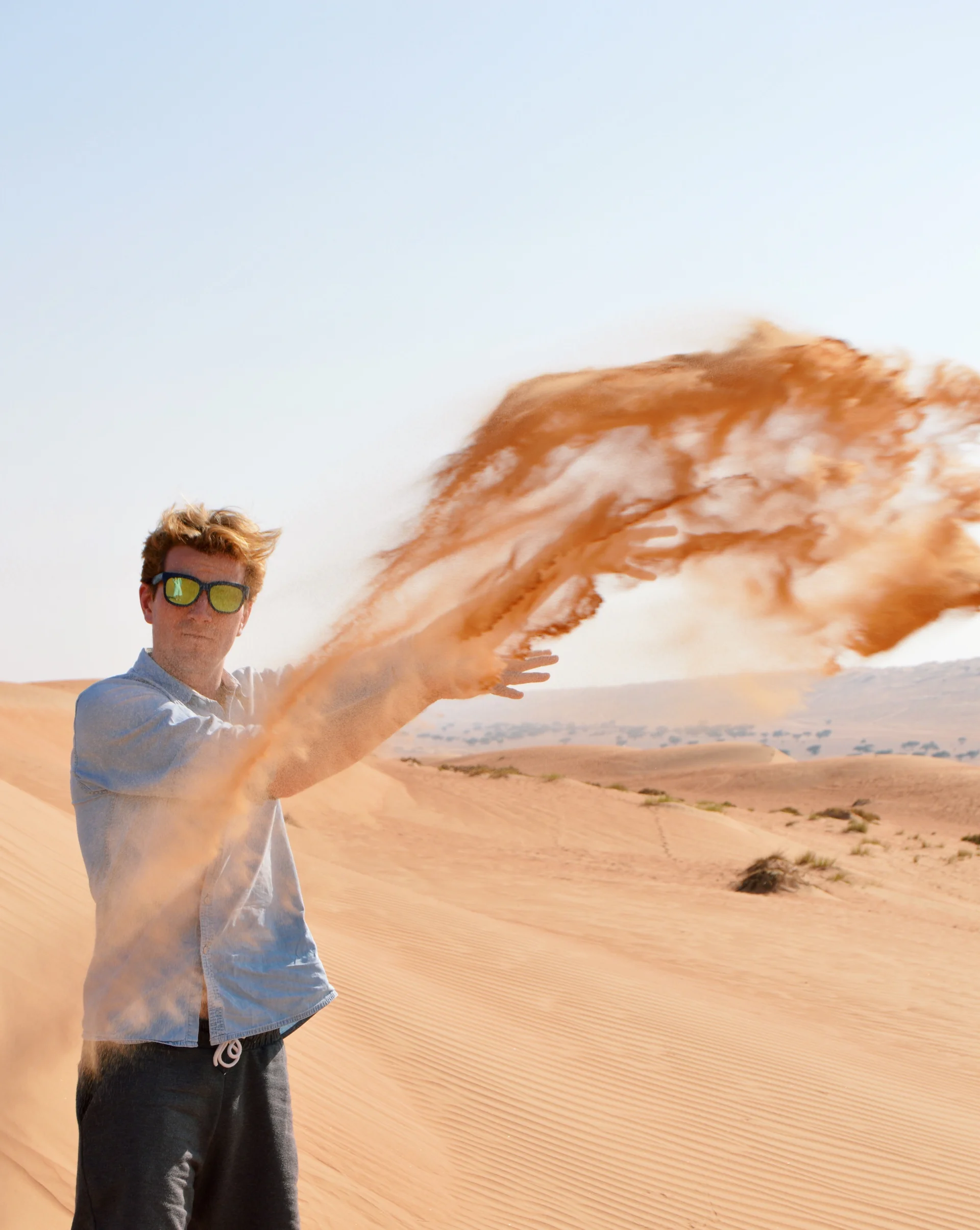
The United Arab Emirates has accomplished more in five decades than most nations manage in two centuries. From a federation of seven emirates with a combined GDP of roughly $5 billion in 1971, the UAE has grown into a $500+ billion economy that rivals several G20 nations in per-capita income. The World Bank reports that the UAE ranks among the top 20 most competitive economies globally, while the International Monetary Fund projects continued growth through 2026 despite regional volatility. This transformation—from pearl diving and desert settlement to aerospace manufacturing, renewable energy deployment, and autonomous vehicle testing—represents one of the most accelerated modernization trajectories in contemporary economic history. Understanding the specific milestones that enabled this shift offers insight into how strategic infrastructure investment, diversification policy, and regulatory innovation can reshape a nation's trajectory within a generation.
Visitor Tips
Best Time: Visit between November and March when temperatures are milder (20-30°C/68-86°F), making outdoor exploration more comfortable. Avoid the summer months (June-August) when temperatures regularly exceed 40°C/104°F and humidity can be oppressive. Pro Tips: 1. Download the RTA Dubai app for public transport navigation and NOL card top-ups. 2. Dress modestly in public areas, especially when visiting religious sites or government buildings. 3. Carry cash (AED) for smaller markets and taxis, though credit cards are widely accepted. 4. Learn basic Arabic greetings—locals appreciate the effort. 5. Use ride-hailing apps like Careem or Uber for transparent pricing. Save Money: 1. Use the metro system extensively—it's clean, efficient, and far cheaper than taxis (fares start at 3 AED/$0.82). 2. Visit free attractions like the Dubai Fountain shows, Jumeirah Beach, and heritage districts. 3. Eat at local cafeterias and shawarma stands for authentic, budget-friendly meals (5-15 AED/$1.36-4.09). 4. Purchase the Dubai Pass for discounted access to multiple attractions. 5. Shop at outlet malls like Dubai Outlet Mall for better deals than premium shopping centers.
How to Get There
Metro: The Dubai Metro is the most efficient way to reach key economic hubs. Red Line stations like Burj Khalifa/Dubai Mall (for financial districts) and Business Bay (for corporate centers) provide direct access. Fares range from 3-7.5 AED ($0.82-2.04) depending on zones, with daily passes available for 20 AED ($5.45). Trains run from 5 AM to midnight Saturday-Wednesday, extending to 1 AM on Thursday and 12 PM-1 AM on Friday. Taxi: Metered taxis are readily available throughout the UAE. Starting fare is 5 AED ($1.36) with 1.82 AED ($0.50) per kilometer. From Dubai International Airport to Downtown Dubai (Burj Khalifa area) costs approximately 50-70 AED ($13.62-19.07) depending on traffic. Ride-hailing services like Careem and Uber typically cost 10-20% more than regular taxis but offer convenience and upfront pricing. Car: Renting a car provides maximum flexibility, with daily rates starting at 100 AED ($27.24) for economy models. Major highways like Sheikh Zayed Road (E11) connect all emirates efficiently. Note that parking in commercial districts like Dubai Marina or DIFC can be expensive (15-30 AED/$4.09-8.18 per hour), and toll gates (Salik) charge 4 AED ($1.09) per pass. International driving permits are required for most foreign visitors.
Frequently Asked Questions
Frequently Asked Questions
- How did the UAE transform from an oil-dependent economy into a diversified global financial hub?
- By deliberately redirecting petrodollar revenues into sovereign wealth funds starting in 1976, the UAE reduced its structural dependence on hydrocarbon exports. The Abu Dhabi Investment Authority and similar vehicles deployed capital into aviation (Emirates airline), logistics (DP World), real estate, and renewable energy rather than extracting more oil. This early diversification meant that oil's share of GDP fell from 50% in 1995 to 30% by 2026, unlike neighboring economies that remained extraction-focused.
- What role did Dubai's 2002 foreign property ownership liberalization play in its rapid urban development?
- Removing ownership restrictions attracted $37 billion in foreign real estate investment between 2003 and 2008, creating the world's fastest-growing property market at that time. The policy generated a liquid marketplace that attracted developers globally and funded massive infrastructure projects like artificial island developments and financial districts. This strategy differentiated Dubai from regional competitors who maintained ownership restrictions, making it a genuine global real estate destination rather than a local market.
- Why did the UAE establish a ministry of artificial intelligence before most nations developed AI policy?
- The UAE government recognized that regulatory clarity and explicit technology alignment would attract investment and talent in an emerging sector where most countries remained uncertain or restrictive. By positioning itself as an AI-receptive jurisdiction in 2017—the first nation to do so—the UAE created competitive advantage in attracting tech companies and developers seeking clear regulatory frameworks. This early positioning extended to autonomous vehicles, blockchain implementation, and cryptocurrency regulation, all areas where the UAE moved faster than developed nations.
- What explains the UAE's ability to recover rapidly from the 2008 financial crisis when other property-dependent markets struggled?
- The UAE's economic diversification meant the nation wasn't entirely dependent on real estate. Tourism, aviation, maritime logistics, and financial services all continued generating revenue after property values declined. Additionally, government-backed entities completed anchor projects like the Burj Khalifa and continued infrastructure investment, sustaining employment and foreign investor confidence in the recovery narrative. By contrast, economies dependent entirely on real estate faced deeper contractions.
- Does automation and technological adoption in UAE ports and airports create labor displacement concerns?
- Yes, measurably. Blockchain port systems, container automation, and AI-driven customs clearance have reduced traditional logistics employment despite official unemployment statistics suggesting full employment. Labor force participation rates among UAE nationals have declined, and wage stagnation affects lower-skill occupations despite overall GDP growth. This creates a structural challenge: the UAE needs continued technological adoption to remain competitive globally, but automation displaces workers faster than new skill-intensive jobs emerge.
- How sustainable is the UAE's real estate model given climate change and shifting global capital flows?
- The model faces emerging risks. Dubai's geographic exposure to sea-level rise threatens long-term viability of coastal developments and artificial islands. Additionally, as global capital allocation increasingly prioritizes climate-resilient assets, capital flows to the UAE real estate sector may decelerate. The government has responded with renewable energy investment (Noor Abu Dhabi solar facility), but whether these measures sufficiently address climate vulnerability remains contested among development analysts. The transition away from real estate-dependent revenue generation will likely occupy the next decade of UAE economic strategy.