‘Brutal ordination parade’ returns in Chaiyaphum
The 'brutal ordination parade' in Chaiyaphum province is a deeply rooted tradition that has sparked global debate. Young novices are carried on stretchers along a five-kilometer route to a temple, sym
The 'brutal ordination parade' in Chaiyaphum province is a deeply rooted tradition that has sparked global debate. Young novices are carried on stretchers along a five-kilometer route to a temple, symbolizing the renunciation of worldly life. While the event draws crowds for its cultural significance, it also raises ethical questions about humane treatment. This year, attendance surged, reflecting both curiosity and controversy. The parade remains a focal point in Thailand’s ongoing dialogue about balancing heritage with modern values.

What to Expect
As the parade begins near Wat Sa Kaeo, the rhythmic beat of *klong khaek* drums echoes through the streets, mingling with the scent of *joss sticks* and sizzling *moo ping* skewers from street vendors. The procession winds past the historic Chaiyaphum City Pillar Shrine, where locals toss flower garlands onto the stretchers of novices, their faces streaked with white powder and determination. The midday sun intensifies the humidity, while the crowd’s chants of *sadhu* create a hypnotic energy. Along the route, elderly women in traditional *pha sin* skirts offer blessings, their hands trembling as they press small amulets into the palms of spectators. The parade’s climax at Wat Phra That Nong Kum is marked by a sudden hush as novices dismount, their bare feet touching the temple’s sacred ground for the first time.
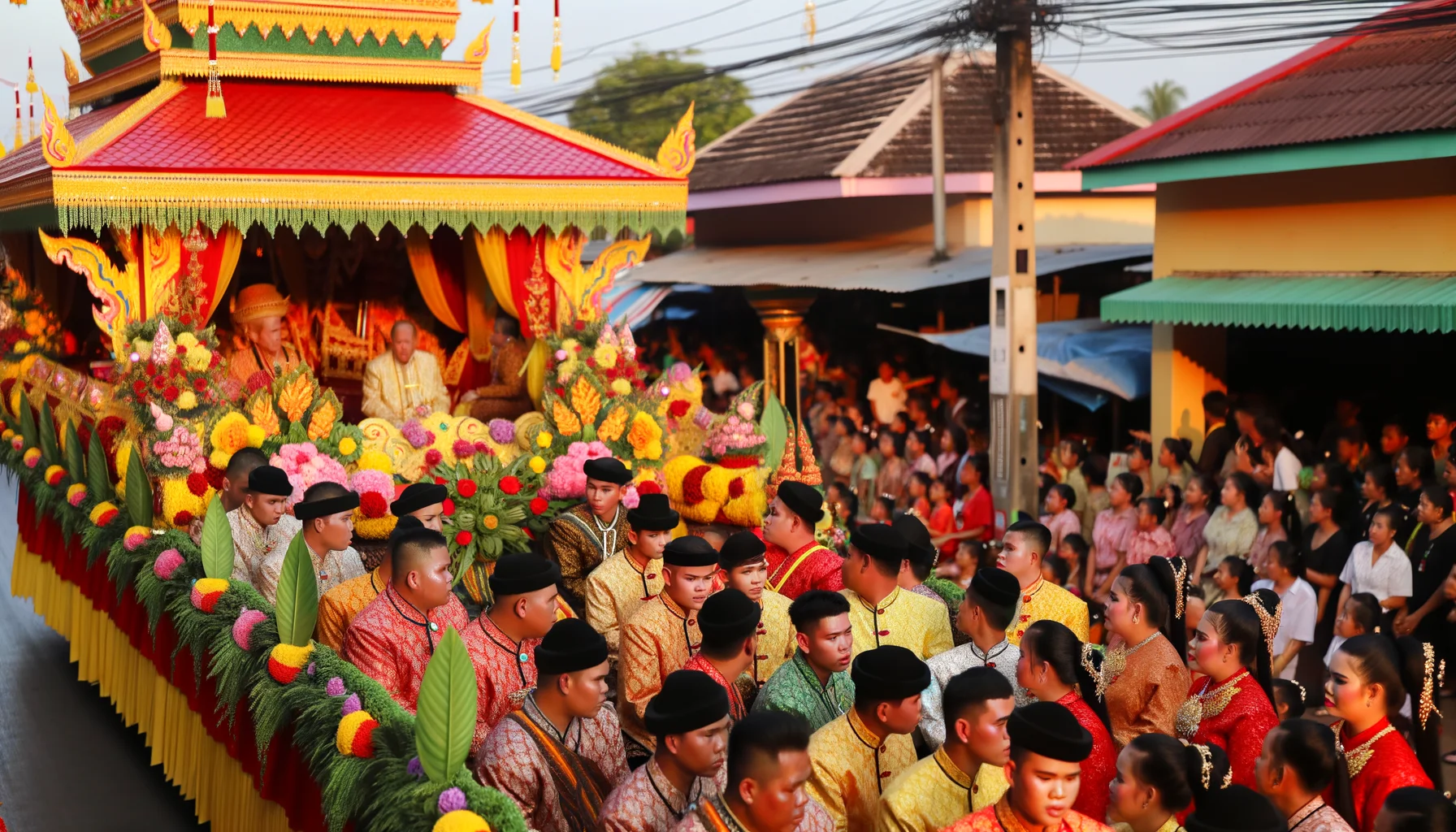
In the heart of Thailand, the controversial 'brutal ordination parade' made its return to Chaiyaphum province, attracting considerable attention. Historically, this event is known for its stark rituals in which young novices are carried on stretchers over a five-kilometer journey to a temple. This year's event was no exception, drawing criticism and curiosity alike. This parade isn't merely a local spectacle—it raises significant questions about tradition vs. modern ethics in Thailand's evolving cultural identity. Reports from the Bangkok Post indicate increased attendance this year, perhaps due to growing interest in unique cultural traditions. However, the ethical debate surrounding the event persists, spotlighting the tension between preserving cultural heritage and ensuring humane practices. The core of this discussion lies in how Thailand balances these conflicting demands.
Visitor Tips
For visitors attending the parade, timing and preparation are key. **Best Time:** Arrive by 6 AM to secure a spot near the starting point at Wat Sa Kaeo, where the morning light softens the intensity of the rituals. **Pro Tips:** Wear lightweight, breathable clothing—locals recommend loose cotton to combat the heat—and bring a reusable fan, as shade is scarce. **Local Etiquette:** Avoid touching the novices or their stretchers, and never step over offerings left on the ground. **Save Money:** Skip overpriced hotel breakfasts and try *khao tom* (rice soup) from street stalls near the parade route for 30 THB. For souvenirs, bargain at the night market near Chaiyaphum Rajabhat University, where handwoven *sinh* textiles are sold by artisans from nearby villages.
How to Get There
Chaiyaphum’s parade is accessible via multiple transport options, though planning ahead is essential due to limited parking and heavy crowds. **Metro:** Take the MRT Blue Line to Chatuchak Park Station, then transfer to Bus 83 (Khon Kaen route) for a 3.5-hour ride to Chaiyaphum Bus Terminal (fare: 180 THB). From there, a *songthaew* (shared taxi) to Wat Sa Kaeo costs 20 THB per person. **Taxi:** Use Grab or a metered taxi from Bangkok’s Don Mueang Airport (2.5-hour drive; ~1,200 THB one-way). Agree on a fixed price in advance, as drivers may refuse to use meters during peak festival days. **Car:** Drive via Highway 2 (Mittraphap Road), exiting at Chaiyaphum’s Kilometer 200 marker. Park at the municipal lot near the City Pillar Shrine (50 THB/day), a 10-minute walk from the parade route. **Local Tip:** Avoid driving on the parade day itself—streets around Wat Phra That Nong Kum close by 8 AM, and detours add 30+ minutes to travel time.
Frequently Asked Questions
Frequently Asked Questions
- What is the 'brutal ordination parade'?
- The parade, locally called *Buat Phra* or 'monk ordination procession,' traces its origins to the Ayutthaya period, when it symbolized a young man’s transition into monkhood. In Chaiyaphum, the ritual took on its current form in the 19th century under King Rama III, who sought to reinforce Buddhist devotion in the region. The five-kilometer route mirrors the *Buddha’s first steps* after enlightenment, with novices carried on *pha yao* (long stretchers) to prevent their feet from touching the ground—a sign of purity. However, in 2018, a novice fainted from heat exhaustion, prompting calls for reform. Today, the parade begins at dawn with a blessing from the abbot of Wat Sa Kaeo, where novices receive their first alms from the governor of Chaiyaphum.
- Why is the parade controversial?
- Critics highlight the physical and psychological strain on novices, some as young as 12. In 2022, a study by Mahidol University found that 60% of participants reported dizziness or nausea during the procession, while animal rights groups have condemned the use of live roosters in pre-parade rituals (a practice now banned). The controversy deepened in 2023 when a viral video showed a novice’s stretcher collapsing mid-route, sparking a national debate. Supporters argue the parade teaches resilience and community values, pointing to its role in preserving the *Isan* dialect and folk music. The provincial government now mandates medical tents every 500 meters, but enforcement is inconsistent.
- How does the parade impact local tourism?
- The parade injects ~50 million THB into Chaiyaphum’s economy annually, with homestays in Ban Khwao village reporting 90% occupancy during the event. However, the influx strains infrastructure—hotels raise prices by 40%, and the city’s sole wastewater treatment plant often overflows. Local businesses have adapted: *Krua Khun Yai* restaurant now offers a 'parade special' (spicy *som tam* and *larb moo* for 80 THB), while tuk-tuk drivers charge 300 THB for a 2-hour route tour (negotiable to 150 THB). The provincial tourism office estimates that 30% of visitors return for Chaiyaphum’s lesser-known attractions, like the *Phu Laen Kha* National Park, suggesting the parade’s long-term benefits outweigh short-term disruptions.
- Has the parade changed in recent years?
- Reforms began in 2019 after a novice suffered a heatstroke. The route was shortened from 7 km to 5 km, and stretchers now include padded seats and sunshades. In 2021, the province introduced a 'novice welfare hotline' for participants to report discomfort, though only 12 calls were logged last year. Cultural shifts are also evident: traditionally, novices were carried by family members, but today, 20% of carriers are hired laborers (paid 500 THB/day). The parade’s opening ceremony now includes a 10-minute 'ethics talk' by a monk, though critics dismiss it as performative. Notably, the number of foreign participants has doubled since 2020, with a record 15 non-Thai novices joining the 2024 procession.