Sumidagawa Fireworks Festival 2026 — Dates Announced
The first time I attended the Sumidagawa Fireworks Festival, I was struck by how the event transcends its reputation as merely a fireworks display. It was a sweltering July evening in 2019 when I join
The first time I attended the Sumidagawa Fireworks Festival, I was struck by how the event transcends its reputation as merely a fireworks display. It was a sweltering July evening in 2019 when I joined the sea of people lining the Sumida River, the air thick with the scent of grilled corn and mosquito repellent. Around me, children clutched glow sticks while grandparents reminisced about festivals past, their voices barely audible over the hum of anticipation. When the first firework erupted—a golden chrysanthemum blooming against the indigo sky—the crowd erupted in unison, a chorus of 'oohs' and 'aahs' that felt almost primal. Dating back to the Edo period, the Sumidagawa Fireworks Festival is one of Tokyo’s oldest and most beloved traditions, a celebration of *hanabi* (fire flowers) that embodies the Japanese appreciation for fleeting beauty. On July 25, 2026, an estimated one million attendees will gather along the riverbanks to witness 20,000 fireworks illuminate the night, their brilliance mirrored in the dark waters below. This isn’t just a spectacle; it’s a cultural phenomenon that draws visitors from across the globe, offering a glimpse into Japan’s vibrant summer traditions. The festival’s enduring appeal lies in its ability to blend history with modernity, creating an experience that is as much about the shared joy of the crowd as it is about the dazzling display overhead. Whether you’re a first-time visitor or a seasoned festival-goer, the Sumidagawa Fireworks Festival promises an unforgettable night where the past and present collide in a symphony of light and sound.

What to Expect
As you approach the Sumida River on the evening of the festival, the air is alive with the chatter of excited crowds and the sizzle of street food stalls lining the riverbanks. The scent of *yakisoba* noodles and *taiyaki* (fish-shaped cakes filled with sweet red bean paste) mingles with the faint tang of the river, creating a uniquely Tokyo summer aroma. Vendors hawk everything from *ramune* soda to *kakigori* (shaved ice), their colorful stalls adding to the festive atmosphere. The river itself becomes a mirror, reflecting the glow of lanterns and the flicker of smartphone screens as attendees jockey for the best viewing spots. Families spread out picnic blankets, while groups of friends clink cans of *chu-hi* (a popular Japanese alcoholic beverage) in celebration. As dusk deepens, the murmur of the crowd swells into a roar of anticipation. The first firework—a thunderous crack followed by a burst of crimson—sends a collective gasp through the crowd. Over the next 90 minutes, the sky becomes a canvas of light, with fireworks exploding in rapid succession: golden willows trailing sparks like falling stars, vibrant peonies blooming in midair, and *niagara* cascades that seem to pour down the sky. The sound is deafening yet exhilarating, a symphony of booms and whistles that vibrates through your chest. Between sets, the crowd erupts in applause, their faces illuminated by the flickering glow of the fireworks. The experience is sensory overload in the best possible way—sights, sounds, and smells blending into a single, unforgettable moment.
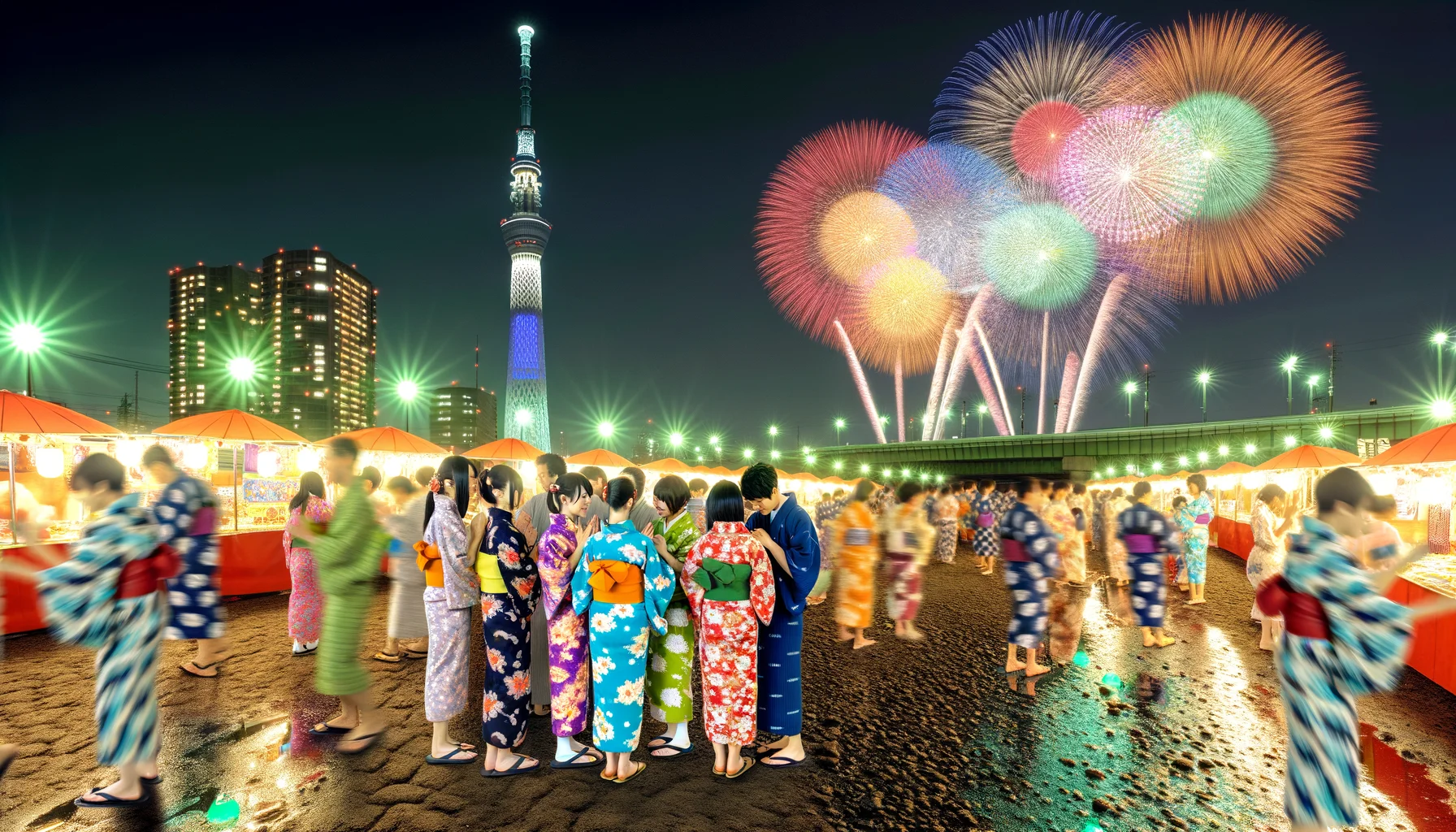
Japan's celebrated Sumidagawa Fireworks Festival is set to mesmerize locals and travelers alike on July 25, 2026. As dusk settles over Tokyo, the Sumida River transforms into a shimmering stage for one of the city’s most iconic summer events. The air buzzes with anticipation as families, couples, and groups of friends stake out their spots along the riverbanks, spreading out picnic blankets and unpacking bento boxes filled with yakitori, takoyaki, and cold beverages. The first crackle of fireworks sends ripples of excitement through the crowd, their reflections dancing on the water’s surface. With an estimated one million attendees and 20,000 fireworks lighting up the night sky, this spectacle is unparalleled in scale and emotion. The festival not only reinforces its status as a key highlight on Tokyo’s cultural calendar but also underscores the city’s ability to blend tradition with modernity. The economic ripple effect is significant, drawing both domestic and international visitors who flock to experience the magic firsthand. Beyond the numbers, the Sumidagawa Fireworks Festival reveals a growing enthusiasm for large-scale cultural events, where the collective gasp of awe unites strangers in a shared moment of wonder.
Visitor Tips
How to Get There
Frequently Asked Questions
Frequently Asked Questions
- What time does the Sumidagawa Fireworks Festival start?
- The Sumidagawa Fireworks Festival officially begins at 7 p.m. and concludes around 8:30 p.m., but the atmosphere builds long before the first firework. Many attendees arrive as early as 4 p.m. to secure prime viewing spots along the Sumida River, turning the area into a lively pre-party. Streets fill with food stalls, music, and chatter, creating a festive vibe that peaks when the night sky erupts in color. Arriving early ensures you won’t miss a moment of the spectacle or the vibrant crowd energy.
- How many fireworks are launched during the festival?
- Approximately 20,000 fireworks are launched from two strategic locations along the Sumida River, making it one of Japan’s largest fireworks displays. The sheer volume ensures a nonstop 90-minute show, with fireworks exploding in rapid succession. Expect everything from dazzling *niagara* waterfalls to intricate *warimono* patterns, each designed to outshine the last. This scale rivals other iconic events like the Tamagawa Fireworks Festival, cementing its status as a must-see summer tradition.
- How many people typically attend the festival?
- The Sumidagawa Fireworks Festival draws nearly one million attendees annually, transforming Tokyo’s riverbanks into a sea of spectators. The massive turnout reflects the event’s cultural significance and summer appeal. Crowds gather hours in advance, filling parks, bridges, and even rooftops for a glimpse of the show. While the sheer number of people can feel overwhelming, the shared excitement creates a sense of community that’s part of the experience.
- Why is the Sumidagawa Fireworks Festival culturally significant?
- Rooted in the Edo period, the Sumidagawa Fireworks Festival is a cherished tradition symbolizing Japan’s love for *mono no aware*—the appreciation of fleeting beauty. Fireworks, or *hanabi*, represent life’s impermanence, a theme deeply embedded in Japanese aesthetics. The festival also honors the river’s historical role as a gathering place, blending modern spectacle with centuries-old customs. For locals and visitors alike, it’s a celebration of summer, community, and cultural pride.
- What are some challenges faced by organizers?
- Organizing an event of this scale comes with logistical hurdles, particularly crowd management. With nearly one million attendees, metro stations and streets become congested, leading to temporary closures or delays. Past festivals have seen overcrowding near key viewing areas, prompting organizers to implement timed entry or designated zones. Safety is another concern, with emergency teams on standby for heat exhaustion or minor injuries. Despite these challenges, meticulous planning ensures the festival remains a safe and unforgettable experience.
- Where are the best spots to watch the fireworks?
- For unobstructed views, head to the riverbanks near Asakusa or the bridges like Kototoi and Azuma. Tokyo Skytree’s surrounding area offers elevated perspectives, though it gets crowded. Rooftop bars in the vicinity provide a premium (but pricey) experience. Avoid areas near train stations, as they tend to be packed with post-event crowds. Arriving early is key—many spots fill up hours before the show begins.
- Are there any local customs I should be aware of?
- Embrace the tradition of wearing a *yukata* (summer kimono) to immerse yourself in the festival spirit. Many locals also bring picnic blankets and bento boxes, so consider packing your own snacks. During the fireworks, avoid loud conversations or pointing—it’s considered disrespectful. Instead, clap and cheer along with the crowd. If invited to a *hanabi* party, bring a small gift like sweets as a token of appreciation.